Calculation made considering the value of 3.5 billion PET bottles removed from the environment annually, divided by one year, including the number of days, hours, minutes, and seconds. These definitions allow us to conclude that one day can be converted into a total of 86,400 seconds. Based on this, along with the user's browsing time, the result is displayed in the website's calculator.
PCR
Pet PCR Resin
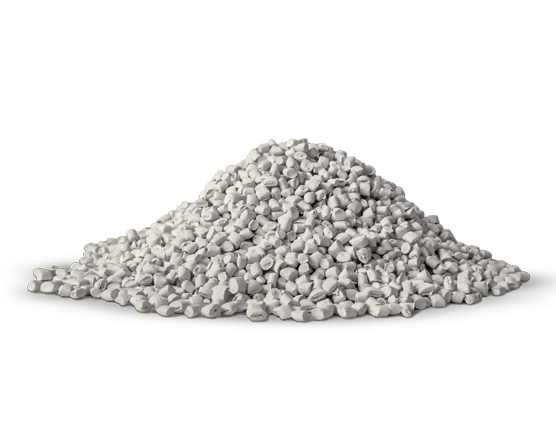
Resin obtained from PET bottles post-consumption, with cutting-edge technology, meeting the most demanding quality standards.
The properties of PET PCR resin are similar to virgin resin and contribute to the circular economy.
Valgroup was the first Brazilian company to have PET PCR resin registered with Anvisa, certified for contact with food.
Through Bottle-to-Bottle recycling technology, it is possible to obtain PCR PET resin from bottles of the same material that have been used and discarded.
The process involves several stages of separation and cleaning. First, the PET bottles are separated from other plastics by automatic separators to achieve a purity greater than 99%. Afterwards, they are minced and cold and hot washed to obtain hyper flakes.
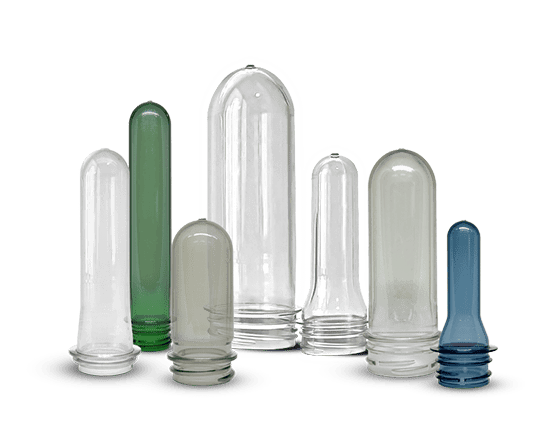
These flakes are subjected to high temperatures for decontamination and extrusion, obtaining an amorphous pellet, which is crystallized.To reach the quality standard required for the production of a 100% recycled bottle, there is still the need for an additional step in the presence of a solid state polymerization reactor. This reactor is responsible for the final decontamination and recovery of the initial PET molecular structure. All these steps together make PET recycling possible, reconstituting its original properties and allowing it to be injected and blown to create a new bottle.
Resin obtained from PET bottles post-consumption, with cutting-edge technology, meeting the most demanding quality standards.
The properties of PET PCR resin are similar to virgin resin and contribute to the circular economy.
Valgroup was the first Brazilian company to have PET PCR resin registered with Anvisa, certified for contact with food.
Features
Through Bottle-to-Bottle recycling technology, it is possible to obtain PCR PET resin from bottles of the same material that have been used and discarded.
The process involves several stages of separation and cleaning. First, the PET bottles are separated from other plastics by automatic separators to achieve a purity greater than 99%. Afterwards, they are minced and cold and hot washed to obtain hyper flakes.
These flakes are subjected to high temperatures for decontamination and extrusion, obtaining an amorphous pellet, which is crystallized.To reach the quality standard required for the production of a 100% recycled bottle, there is still the need for an additional step in the presence of a solid state polymerization reactor. This reactor is responsible for the final decontamination and recovery of the initial PET molecular structure. All these steps together make PET recycling possible, reconstituting its original properties and allowing it to be injected and blown to create a new bottle.
Discover more sustainable options for this product
Service that closes the plastic cycle by acquiring and transforming waste into new materials.
 Português do Brasil